


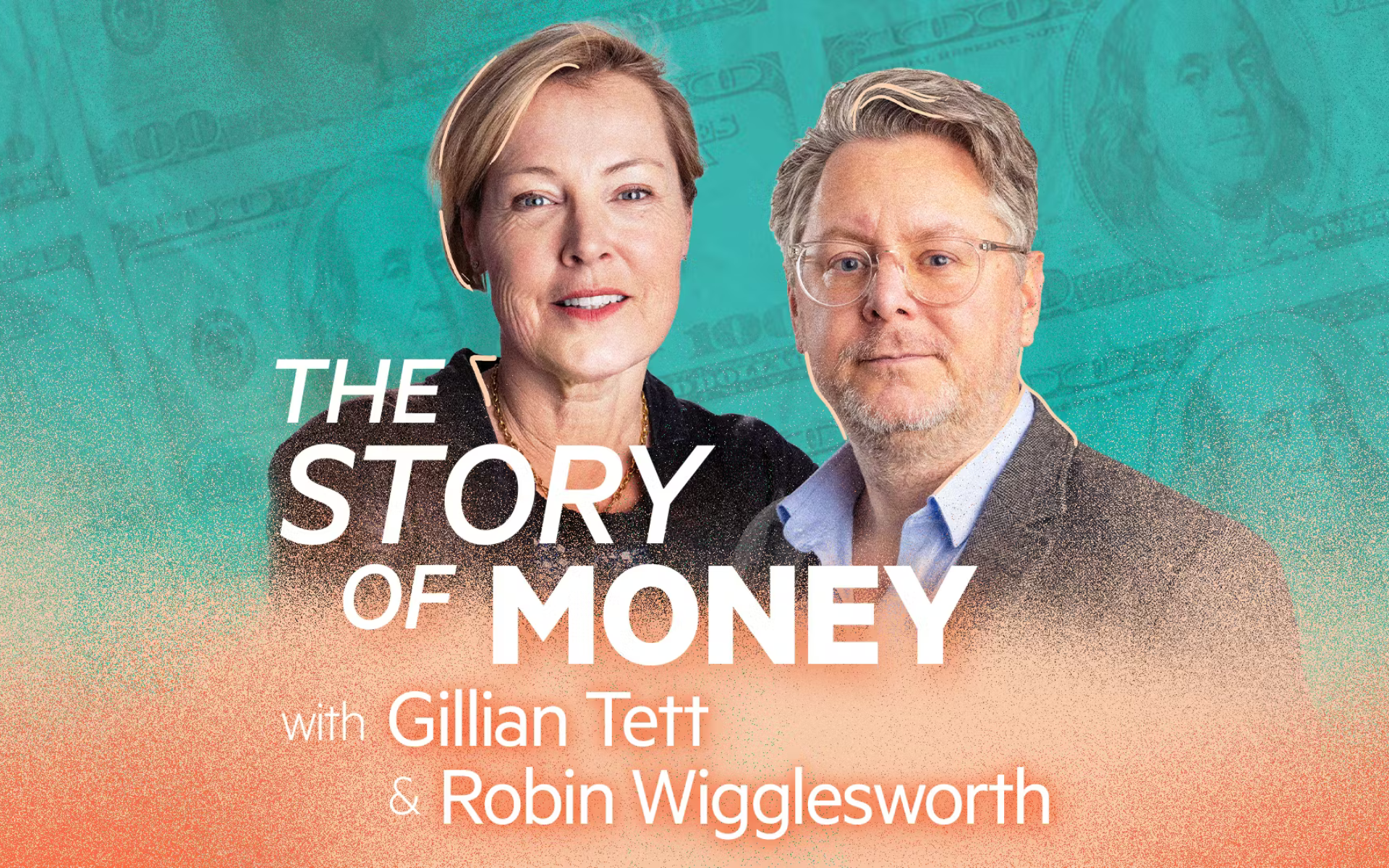
Those who do not study history may be destined to repeat it… and lose money. The Financial Times’ newest podcast, The Story of Money, takes this idea seriously, and builds an entire series around it. Hosted by FT columnist Gillian Tett and FT Alphaville editor Robin Wigglesworth, the show explores how the history of global finance can help explain today’s markets and anticipate future risks and opportunities. This is no dry finance show; The Story of Money is a fully fleshed out history podcast ready to compete with the likes of The Rest Is History and Dan Snow.
From unregulated banking experiments in 19th-century frontier America to institutionalised debt forgiveness in ancient Mesopotamia, each week, the pair dive into the ideas, personalities, institutions and turning points that have shaped the financial system as we know it. Drawing on the FT’s global newsroom and its 138-year history of reporting, the series combines storytelling, analysis and expert insight, with contributions from FT journalists and guests across the financial world.
However, The Story of Money is more than a history lesson and there’s plenty here for the FT’s traditional audience, offering a way to understand today’s financial world, from shifting market regimes to risks building beneath the surface. Tett and Wigglesworth revisit the invention of credit derivatives, the mechanics of modern financial engineering, and the great market meltdowns that have repeatedly reshaped regulation, behaviour and belief.
The economist John Kenneth Galbraith once quipped that “there can be few fields of human endeavour in which history counts for so little as in the world of finance.” The Story of Money sets out to prove the opposite.